Panel 2: Methods in Detail
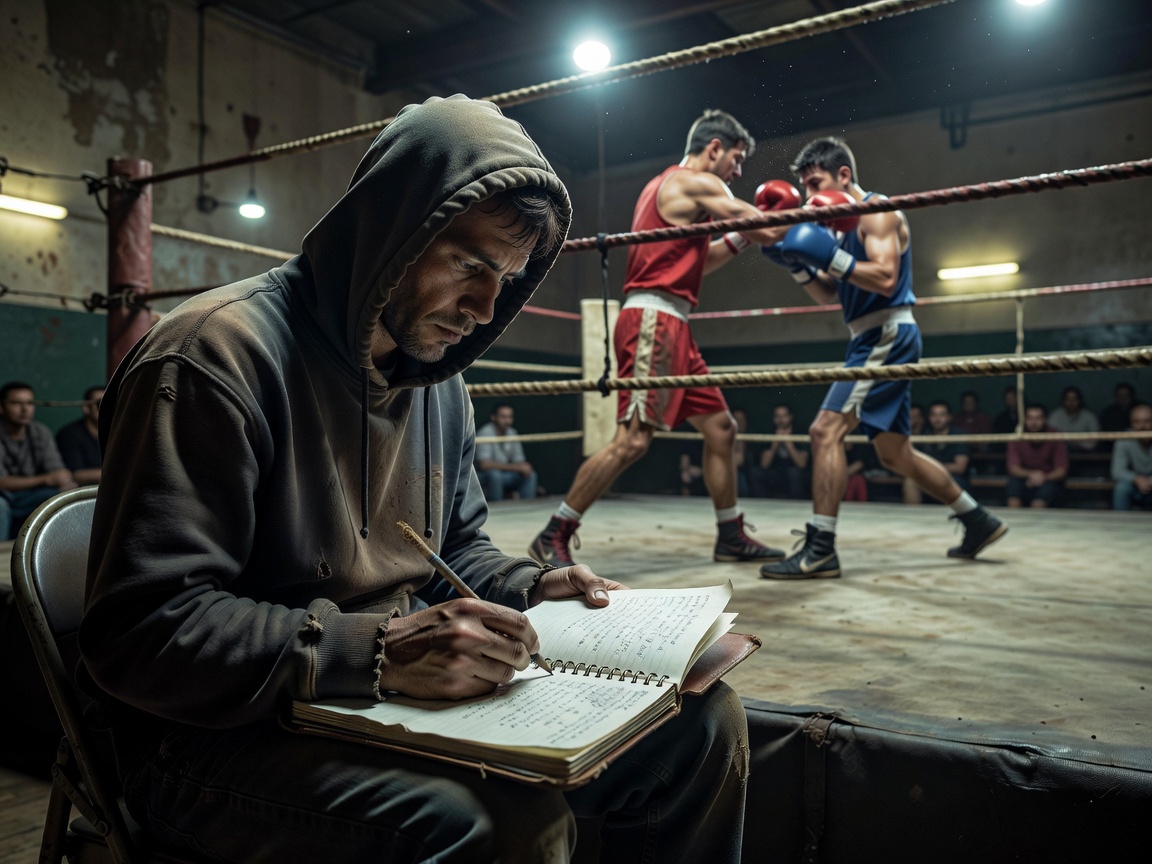
The Evaluation Sheet
Stance and balance
Everything starts at the feet. Watch whether the boxer stays in position after throwing, or lunges and leaves their weight forward. Good balance shows as punches thrown from a stable base, quick resets to stance, and the ability to pivot off the ropes without crossing the feet. Score a 5 only if balance holds in the third round, when fatigue exposes shortcuts. Vasyl Lomachenko's amateur footage is a standard reference for angle-taking built on balance.
Defensive reflexes
Defence is the hardest skill to teach late. Note how the boxer avoids punches: slipping, rolling, catching on the gloves, or simply moving out of range. Count clean shots taken to the head per round as a rough guide. Since elite men's bouts dropped headguards in 2013 under the then-governing body AIBA, clean head shots carry more weight in both scoring and long-term welfare. Look for defence that leads straight into a counter rather than a pause.
Ring generalship
Who controls where the fight happens? A boxer with generalship dictates range, cuts off the ring, or keeps the centre while the opponent circles. Under the 10-point must system, judges reward clean punches, competitiveness and control of the bout, so generalship often decides close rounds. Watch for mid-bout adjustments after the corner speaks; changing the plan between rounds is a strong positive reading.
Conditioning and engine
Three rounds of three minutes is short, so output drop-off is obvious. Compare work rate in round one and round three. Also watch recovery between bouts across a championship weekend: a boxer who looks flat on day three may have made weight badly. Note posture in the corner, breathing and whether punches lose snap. Engine can be trained, but a boxer who fades while winning on skill tells you they are relying on talent alone.
Coachability and temperament
Watch the corner between rounds. Does the boxer look at the coach and nod, or stare across the ring? In the gym, see how quickly a correction appears in the next drill. Cus D'Amato famously placed emotional control at the centre of his teaching in Catskill. Score behaviour after a knockdown or a bad decision as carefully as behaviour after a win.
Live versus Video
| Factor | Live viewing | Video review |
|---|---|---|
| Atmosphere and nerves | Clear | Partial |
| Punch detail | Fast, easy to miss | Frame-by-frame |
| Corner interaction | Visible | Often cut |
| Volume of boxers | Low | High |
| Bias risk | Crowd noise | Knowing the result |
Practical method: score live, then rewatch on video within 48 hours and note every change to your score with a reason. Over a season, the gap between your two scores shows where your eye needs work.